
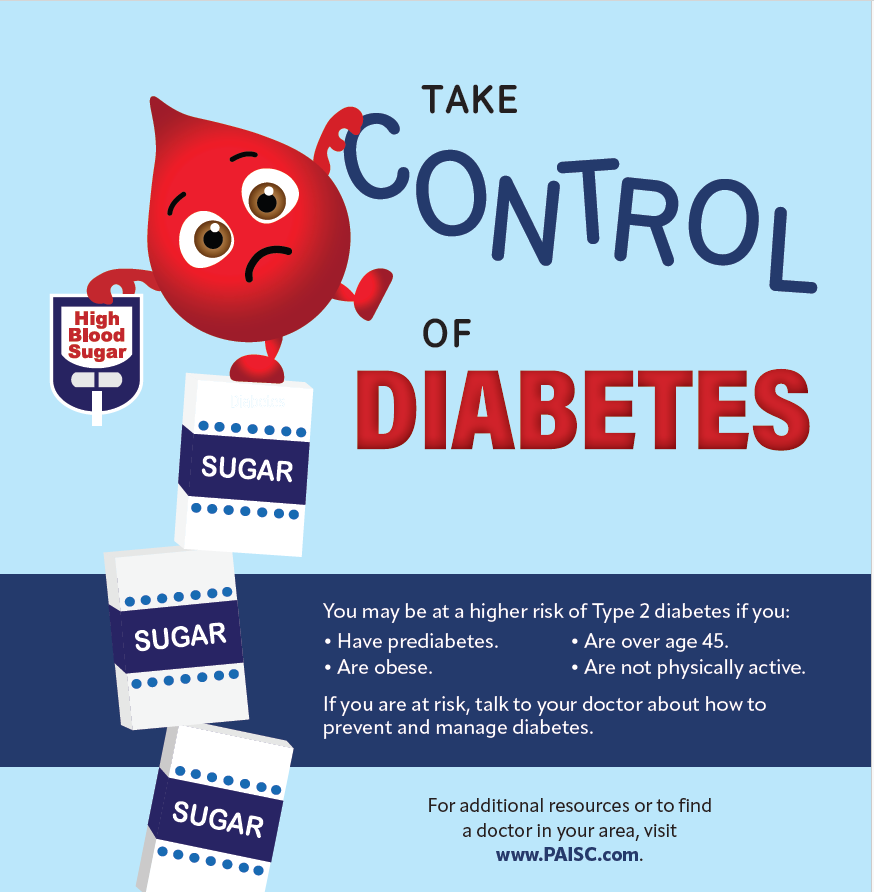
Take Control of Diabetes
If you have diabetes, you are not alone. Around 40 million U.S. adults are living with the disease. One in 4 don’t know they have it. Two in 5 adults in the U.S. have prediabetes. Eight in 10 of them don’t know they have it.
The Centers for Disease Control and Prevention (CDC) says diabetes occurs when your body doesn’t make enough insulin or cannot use it in the right way. Insulin is a hormone that allows blood sugar, or glucose, to enter the body’s cells and be used for energy. When insulin doesn’t work as it should, glucose builds up in the bloodstream.
Over time, diabetes can lead to serious health issues such as:
-
Heart disease.
-
Stroke.
-
Kidney damage.
-
Eye problems.
-
Lower-limb amputations.
In fact, diabetes is the leading cause of kidney failure and adult blindness in the U.S.
You may be at a higher risk of Type 2 diabetes if you:
-
Have prediabetes.
-
Are obese.
-
Are over age 45.
-
Are not physically active.
Prediabetes and Type 2 diabetes often develop without any symptoms. Because of this, you should be screened by your doctor if you have risk factors.
There is no cure for diabetes. But you can prevent and manage Type 2 diabetes with healthy habits and the right help.
Nutrition and Exercise
Healthy eating and exercise are two of the best ways to prevent and manage diabetes.
Eating balanced meals can help keep your blood sugar stable. You should avoid or limit sugary drinks and highly processed foods. Instead, make whole foods a part of your diet.
The CDC says your diet should be rich in vegetables such as broccoli, spinach and green beans. Lean proteins such as chicken, beans and eggs are also a vital part of a healthy eating plan.
Frequent exercise is another good way to keep the disease in check. It can improve blood sugar control. It can also help you lose weight and manage your blood pressure.
The CDC says you should get at least 150 minutes of moderate-intensity physical activity each week. This equates to around 30 minutes each day, five days a week. Even simple exercises such as walking can make a big difference. In fact, 1 in 12 diabetes cases could be prevented through routine exercise.
Managing Diabetes
If you have diabetes, working closely with your doctor is key. The right care can help you stay healthy and avoid problems:
-
Checkups — If you are having trouble managing diabetes, you should see your doctor every three months. If you’re meeting your treatment goals, you should see your doctor every six months. Your doctor will review your progress and adjust your care plan.
-
A1C Testing — An A1C test measures your average blood sugar levels over the past three months. Your doctor can do this test at your routine checkup. It helps your doctor see how well your treatment plan is working. If you have diabetes, you should have an A1C test every three months.
-
Medication Adherence — Many people with diabetes take insulin and other medications to help manage blood sugar and prevent problems. Make sure you take your medicine as prescribed by your doctor.
-
Routine Eye Exams — If you have diabetes, you are at greater risk of vision loss and eye disease. Pay close attention to any changes in your eyesight. Be sure to visit your eye doctor at least once a year. Ninety percent of diabetes-related vision loss can be avoided with early treatment.
Living with diabetes requires support. But you can still enjoy a full and healthy life. Healthy eating, exercise and the right care can all make a big difference.
If you think you may be at risk, talk to your doctor about screening and prevention.
The CDC is an independent organization that provides health information you may find helpful.
[Sources, accessed March 11, 2026]
Diabetes Basics | Diabetes | CDC
A1C Test for Diabetes and Prediabetes | Diabetes | CDC
Promoting Medication Management | Diabetes | CDC
Type 2 Diabetes | Diabetes | CDC
Diabetes Meal Planning | Diabetes | CDC
Promoting Eye Health | Diabetes | CDC
Your Diabetes Care Schedule | Diabetes | CDC
Diabetes Testing | Diabetes | CDC
National Diabetes Statistics Report | Diabetes | CDC
Diabetes in America: Prevalence, Statistics, and Economic Impact
https://www.cdc.gov/physical-activity/php/about/index.html
*Statistics and information are accurate as of the time of publication and may change over time.